
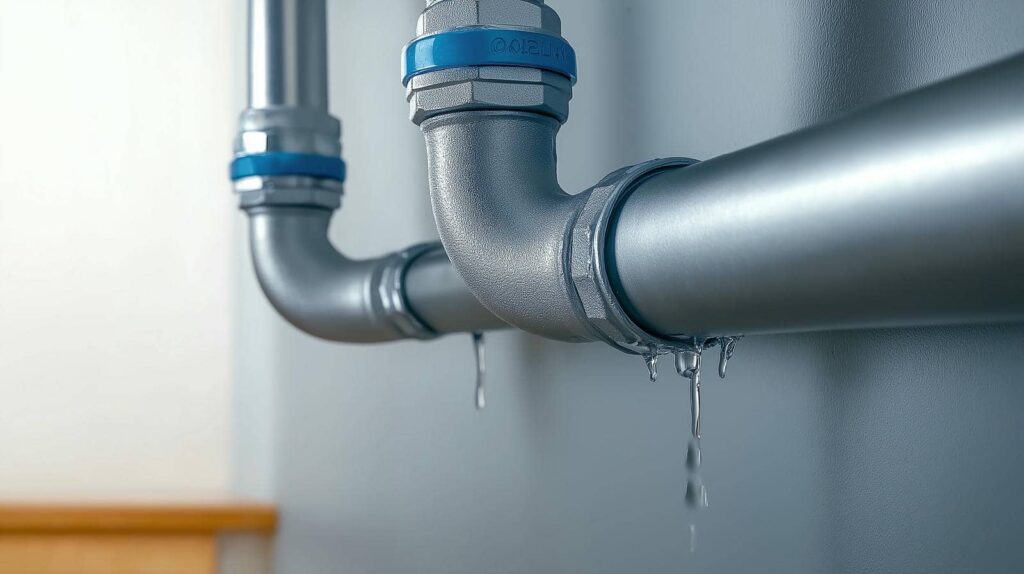
When a pipe bursts, knowing what to do can save you time and money. Start by identifying the leak’s source and shutting off the water supply to prevent further damage. From there, a series of quick burst pipe repair techniques can mitigate the situation. Understanding these methods can help you act effectively and efficiently. Let’s explore the steps you can take to address a burst pipe before professional help arrives.
Key Takeaways
- Locate and shut off the main water supply to prevent further flooding and damage.
- Drain remaining water from affected pipes by opening faucets connected to the burst pipe.
- Use pipe repair tape or epoxy putty for quick sealing of leaks until permanent repairs can be made.
- Apply rubber patches or duct tape for immediate fixes on small leaks to minimize water loss.
- Document damages and seek professional help for comprehensive repairs and to ensure compliance with local codes.
Identify the Source of the Leak
How can you effectively pinpoint the source of a leak?
First, conduct a thorough inspection of visible pipes and fittings for signs of moisture or corrosion.
Utilize leak detection tools like moisture meters or infrared cameras to identify hidden leaks, especially in walls or ceilings where water damage mightn’t be immediately visible.
Pay attention to unusual sounds, such as dripping or hissing, which could indicate a leak’s location.
You should also check water bills for unexplained increases, as this could suggest a slow leak.
Turn Off the Water Supply
To prevent further water damage, you need to locate the shut-off valve immediately.
Once you find it, turn off the main water supply to stop the flow.
This critical step is essential before proceeding with any repair efforts.
Locate Shut-Off Valve
When a pipe bursts, the first critical step is locating the shut-off valve to turn off the water supply. Knowing your home’s valve location can save you from extensive water damage.
Shut-off valve types typically include gate valves, ball valves, and stop valves. Gate valves require a few turns to close, while ball valves operate with a quarter turn.
You’ll usually find the main shut-off valve near the water meter or where the main line enters your home. It’s essential to familiarize yourself with its location before an emergency arises.
Take the time to check and label all valve locations, ensuring you and your loved ones can act swiftly when necessary.
Turn Off Main Water
Swiftly turning off the main water supply is essential to minimizing damage from a burst pipe.
First, locate the main shut-off valve, usually found near the water meter or where the water line enters your home. By shutting it off, you reduce water pressure in the pipes, preventing further leakage and damage.
If you’ve prepared an emergency kit, make certain it includes a wrench or pliers to assist with this task.
After turning off the water, assess the situation to determine the extent of the damage.
Remember, acting quickly protects your property and fosters a sense of community as you share tips and solutions with others facing similar issues.
Prioritize safety and damage control to restore normalcy.
Drain the Affected Pipes
Once you’ve shut off the water supply, it’s essential to drain the affected pipes to prevent further damage.
Open all faucet valves connected to the burst pipe to allow any remaining water to escape.
This step ensures that you can work on the repair without excess water complicating the process.
Shut Off Water Supply
To effectively manage a burst pipe, it’s crucial to shut off the water supply immediately to prevent further damage.
Locate your main water shut-off valve, typically found near the meter or at the perimeter of your home. Once you’ve shut off the valve, the water pressure in the affected pipes will drop, allowing you to minimize flooding and damage.
If you’re equipped with an emergency kit, it should include tools like a wrench to assist with this process. After securing the supply, check other areas for leaks and assess any additional risks.
Timely action in shutting off the water supply can save you from extensive repairs and protect your home from significant water damage.
Open Faucet Valves
After shutting off the water supply, the next step is to open faucet valves throughout your home to drain the affected pipes. This process is vital for minimizing water damage and allows you to assess the situation more clearly.
Start with the highest faucet and work your way down to ensure gravity aids in draining. Different valve types, such as compression and cartridge valves, may require specific techniques for opening.
During this time, pay attention to faucet maintenance—cleaning aerators and checking for leaks can prevent future issues.
Use Pipe Repair Tape
One effective solution for a burst pipe emergency is to use pipe repair tape. This method is quick and can temporarily seal leaks until a permanent fix is applied.
Here’s how to effectively use pipe repair tape:
- Clean the Area: Make certain the pipe surface is free of water and debris.
- Stretch the Tape: As you wrap, stretch the tape to ensure a tight seal.
- Overlap Layers: Wrap the tape around the pipe, overlapping each layer by about half.
- Allow to Cure: Let the tape set for the recommended time before turning the water back on.
Utilizing this pipe repair method is one of the best emergency solutions, providing you with peace of mind during stressful situations.
Apply Epoxy Putty
Applying epoxy putty offers a reliable and effective method for addressing leaks in burst pipes. You’ll appreciate its strong adhesive properties, which create a durable seal that withstands pressure.
To begin, clean the damaged area thoroughly to ensure proper adhesion. Next, prepare the epoxy according to the manufacturer’s instructions, mixing it until it’s uniform.
Once ready, apply the putty directly onto the leak using your fingers or a tool, pressing firmly to mold it into place. Confirm that the putty covers the leak entirely and extends slightly beyond the damaged area for ideal sealing.
Allow it to cure as per the specified time, and you’ll have a robust, waterproof repair that can last for years, showcasing the impressive epoxy properties.
Install a Pipe Clamp
Epoxy putty provides a solid temporary solution for leaks, but for a more immediate fix, installing a pipe clamp can be highly effective.
This method can help you manage leaks until a permanent repair is made. Here’s how you can perform a successful pipe clamp installation:
- Identify the leak: Locate the exact spot where the pipe is damaged.
- Clean the area: Wipe the surface around the leak to ensure a secure fit.
- Position the clamp: Place the pipe clamp over the leak, ensuring it covers the damaged area.
- Tighten the clamp: Use a wrench to tighten the clamp, applying enough pressure to reduce water flow.
This technique serves as a reliable temporary fix, keeping your plumbing intact until you can arrange for a more permanent solution.
Replace the Damaged Section
Replacing the damaged section of a pipe can restore your plumbing system’s integrity and prevent further leaks.
Start by identifying the pipe materials used in your plumbing—commonly PVC, copper, or PEX. Once you have the right replacement section, cut out the damaged part using a pipe cutter for precision. Verify the ends are clean and smooth for a proper fit.
Use suitable installation techniques, such as solvent welding for PVC or soldering for copper, to secure the new section. If you’re working with PEX, a crimping tool may be needed.
Finally, check for leaks by turning the water back on slowly and monitoring the newly installed section. This method creates a reliable, long-lasting repair in your plumbing system.
Call a Professional Plumber
Even after replacing the damaged section of a pipe, some situations may warrant the expertise of a professional plumber.
Emergency plumbing issues can arise unexpectedly, and tackling them alone mightn’t be safe or effective. Here’s when to call in professional services:
- Complexity: If the burst pipe is part of a larger plumbing system, it requires specialized knowledge.
- Location: Pipes hidden behind walls or under floors may need advanced tools for access and repair.
- Damage Assessment: Professionals can identify hidden damage that may lead to future problems.
- Permits and Codes: They ensure repairs comply with local building codes and regulations.
Don’t hesitate to reach out for help; it’s better to be safe and ascertain your home’s plumbing is in expert hands.
Frequently Asked Questions
How Do I Know if My Pipes Need Regular Maintenance?
You’ll know your pipes need regular maintenance if you notice leaks, strange noises, or low water pressure. Conducting a pipe inspection and following a maintenance checklist can help prevent larger issues down the line.
What Are the Signs of a Hidden Pipe Leak?
You’ll notice signs of a hidden pipe leak through moisture indicators like water stains, mold growth, or increased water bills. Implementing leak detection methods early can save you from extensive damage and costly repairs.
Can I Use Duct Tape for Temporary Pipe Repairs?
Sure, you can use duct tape for temporary pipe repairs! While it’s not a permanent solution, its effectiveness can help you manage leaks until you can implement more reliable fixes. Just remember, it’s a short-term fix!
How Long Can I Wait Before Calling a Plumber?
You shouldn’t wait more than a few hours before calling a plumber for pipe repair. Delaying can worsen the damage, leading to costly emergency plumbing situations. Act quickly to minimize potential issues and expenses.
What Materials Should I Always Keep for Emergency Repairs?
Think of your emergency toolkit as a lifeboat in a storm. Always keep PVC patches, plumber’s tape, adjustable wrenches, and sealant ready for quick pipe repair, ensuring you’re prepared for unexpected plumbing disasters.
Recap
In the grand scheme of homeownership, a burst pipe might just be the universe’s way of reminding you to appreciate your plumbing. By following these emergency repair techniques, you can tackle the chaos before a professional arrives. Ironically, what starts as a disaster can turn into a lesson in quick thinking and resourcefulness. So, while you might’ve hoped for a calm Saturday, at least you’ll have a story to tell—one that involves pipe tape and a makeshift repair!