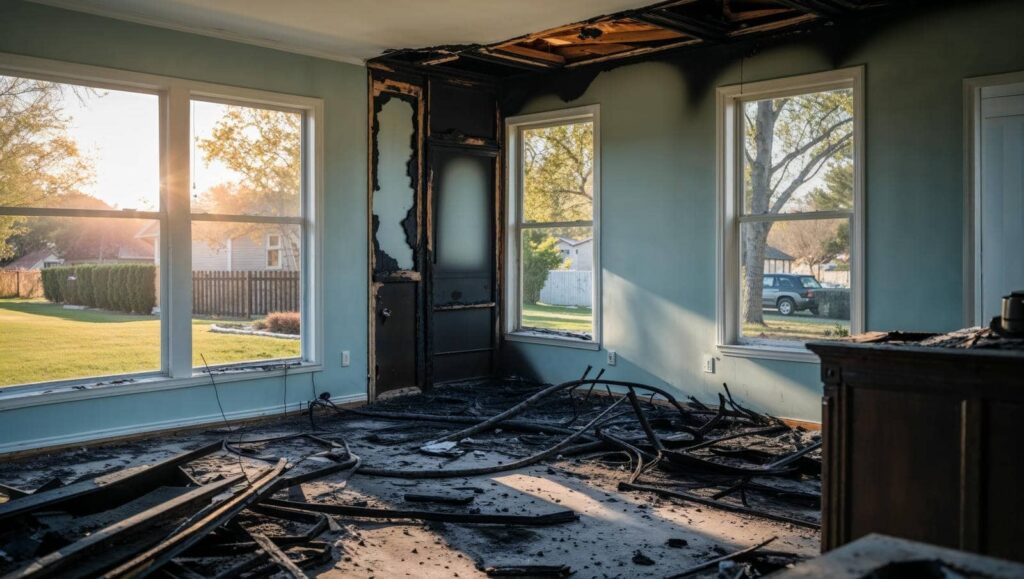
When faced with fire damage, it’s critical to approach cleanup with care and caution. You need to prioritize safety by wearing protective gear and evaluating the stability of the structure. Identifying hazardous materials is fundamental to preventing further risks. As you step into the cleanup process, understanding effective debris removal techniques will greatly affect the restoration efforts. Let’s explore these essential strategies to ensure a thorough and safe recovery.
Key Takeaways
- Prioritize safety by wearing protective gear and ensuring the structure is stable before beginning cleanup efforts.
- Conduct a thorough assessment to identify structural issues, smoke damage, and hazardous materials.
- Remove debris systematically, starting with larger items and disposing of them according to local regulations.
- Utilize specialized cleaning products to effectively eliminate soot, odors, and contaminants from affected surfaces.
- Inspect and restore damaged areas to their original condition, ensuring that all repairs meet safety standards.
Assessing the Damage and Ensuring Safety
Before you plunge into cleanup after a fire, it’s essential to assess the damage and secure your safety. Start with a thorough damage evaluation; take your time and don’t rush.
Look for structural issues, smoke damage, or hazardous materials that could pose risks. Wear protective gear, such as gloves and masks, to safeguard yourself from toxins. Confirm the area is well-ventilated, and never enter if the structure seems unstable.
Inform your insurance company about the damage, as they can provide guidance and support during this tough time. Remember, you’re not alone in this process.
Taking these safety precautions isn’t just about protection; it’s about reclaiming your space and moving forward with confidence.
Removing Debris and Contaminants
Once you’ve confirmed your safety, it’s time to tackle the removal of debris and contaminants left behind by the fire.
Begin by evaluating the area, identifying hazardous materials like burnt wood, insulation, and chemicals. As you engage in debris removal, wear protective gear—gloves, masks, and goggles are essential.
Carefully collect larger items first, ensuring you dispose of them according to local regulations. For contaminant disposal, focus on soot and ash, which can carry harmful particles.
Use a vacuum with a HEPA filter for effective cleanup, followed by damp cloths to capture lingering residues.
Restoring and Repairing Affected Areas
As you move forward with restoring and repairing the affected areas, it’s vital to assess the damage thoroughly to determine what can be salvaged.
Begin by identifying structural elements that are compromised and prioritize safety. Use effective fire restoration techniques to clean surfaces; this often includes deep cleaning walls and ceilings to remove soot and charred materials.
For smoke damage mitigation, consider specialized cleaning products that neutralize odors and stains. Replace or repair damaged insulation, drywall, and flooring as needed.
Frequently Asked Questions
How Long Does Fire Damage Cleanup Typically Take?
Fire damage cleanup typically takes a few days to several weeks, depending on the extent of the damage. You should expect a restoration timeline that accommodates thorough assessment, cleanup, and rebuilding to ensure your safety and comfort.
Will My Insurance Cover Fire Damage Cleanup Costs?
Your insurance policy may cover fire damage cleanup costs, but it depends on your coverage limits. Review your policy carefully to understand what’s included, and don’t hesitate to reach out to your agent for clarification.
Can I Clean Smoke Damage Myself?
Yes, you can tackle smoke damage yourself with a DIY cleanup approach, but it’s essential to understand proper smoke removal techniques. Handling it effectively requires patience, thoroughness, and the right tools to restore your space.
What Should I Do With Soot-Covered Belongings?
To restore your soot-covered belongings, start with gentle soot removal techniques like vacuuming and using damp cloths. For delicate items, consider professional cleaning. Handling them carefully shows you value their sentimental worth and history.
How Can I Prevent Future Fire Damage?
To prevent future fire damage, prioritize fire safety by installing smoke detectors, creating an escape plan, and regularly inspecting electrical systems. Implementing these prevention measures can protect your cherished belongings and ensure your home remains safe.
Wrap-Up
In the aftermath of fire damage, the path to recovery can feel overwhelming, yet it’s also a chance to rebuild and rejuvenate your space. By evaluating the damage carefully and prioritizing safety, you’re not just cleaning up—you’re reclaiming your environment. As you remove debris and restore affected areas, remember that each step brings you closer to healing. Embrace the transformation, and let the process guide you toward a brighter, cleaner future. Your resilience will shine through.