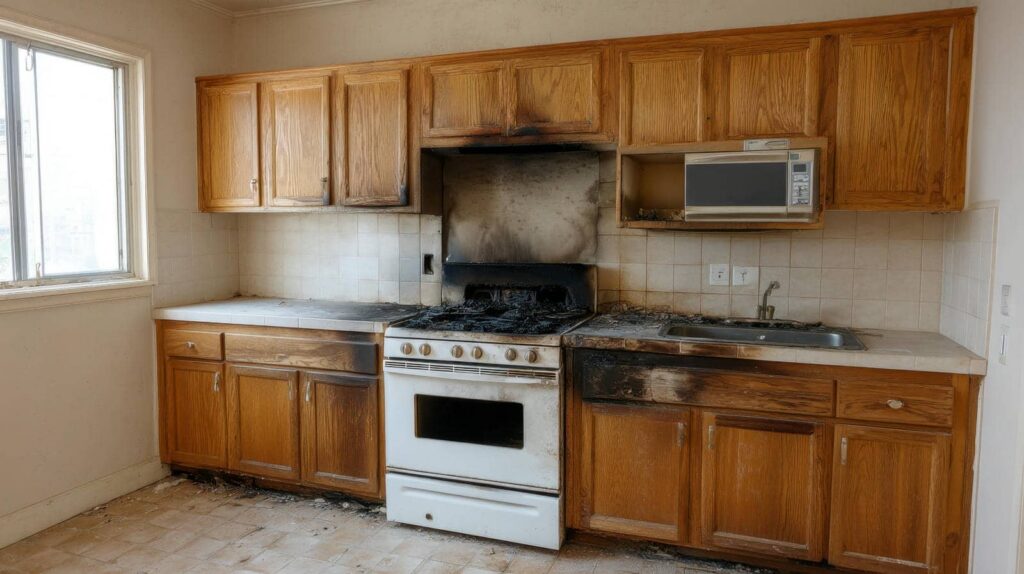
Evaluating damage, ensuring safety, and executing smoke damage cleanup are critical steps in addressing fire and smoke incidents. You need to start with a thorough evaluation of the affected areas to identify hazards and the extent of damage. Next, applying effective cleaning techniques will remove residues efficiently. Finally, restoration efforts must focus on rebuilding and enhancing structural integrity. Understanding these strategies will empower you to tackle the aftermath effectively.
Key Takeaways
- Conduct a comprehensive damage assessment to identify areas needing immediate attention and establish cleanup priorities.
- Implement strict safety precautions, including protective gear and ventilation, to safeguard against hazards during cleanup.
- Utilize a HEPA vacuum for effective soot removal, starting from the top and working downwards to prevent re-contamination.
- Employ specialized cleaning solutions for surfaces, testing them first on inconspicuous areas to avoid further damage.
- Focus on restoration efforts by replacing compromised materials and applying fresh finishes to eliminate odors and enhance aesthetics.
Assessing the Damage and Safety Precautions
Before you begin the cleanup process, it’s essential to assess the damage and establish safety precautions to protect yourself and others. Start by carefully inspecting the affected areas, noting structural integrity and potential hazards like exposed wiring or weakened walls. Use a checklist for your damage assessment to ensure you document all findings thoroughly.
Next, implement safety measures: wear protective gear such as gloves, masks, and goggles to shield against smoke particles and debris. Ensure proper ventilation in the space to minimize inhalation risks. If necessary, disconnect utilities to avoid electrical hazards.
Effective Cleaning Techniques for Fire and Smoke Residue
As you tackle the cleanup of fire and smoke residue, it’s crucial to employ effective cleaning techniques that specifically target the unique challenges posed by these types of damage.
Start by wearing safety equipment such as masks and gloves to protect yourself from harmful particles. Use a HEPA vacuum to remove loose soot and debris, making sure you work from top to bottom to avoid re-contaminating cleaned areas.
For surfaces, opt for specialized cleaning solutions designed to break down soot and smoke stains effectively. Test these solutions on inconspicuous areas first.
Use soft brushes and cloths to gently scrub surfaces, avoiding harsh scrubbing that could cause further damage. Be methodical, and make certain you cover every affected area thoroughly for the best results.
Restoring and Repairing Damaged Areas After Cleanup
Once you’ve thoroughly cleaned the affected areas, the next step involves restoring and repairing the damage left behind by fire and smoke. This process is essential to ensure your home regains its functionality and aesthetic appeal.
Here are key actions you should take:
- Assess structural integrity: Inspect walls, ceilings, and floors for damage.
- Repairing structures: Replace or reinforce compromised materials to restore safety.
- Clean and restore possessions: Salvage items where possible, using professional cleaning methods.
- Repaint and refinish: Apply fresh paint or finishes to eliminate smoke odors and improve appearance.
Frequently Asked Questions
How Long Does Fire and Smoke Damage Cleanup Typically Take?
Cleanup timelines can vary, but you’re typically looking at several days to weeks for the restoration process. Factors like damage extent and materials involved will influence how quickly you can return to normal.
Can I Clean Smoke Damage Myself, or Should I Hire Professionals?
You can attempt DIY cleaning, but it’s often more effective to hire professional services. They possess specialized equipment and expertise to thoroughly eliminate smoke damage, ensuring your space is restored safely and efficiently for everyone involved.
What Are the Health Risks Associated With Smoke Damage Exposure?
Breathing in smoke’s dark veil can lead to respiratory issues and chemical exposure, inviting persistent coughs, asthma flare-ups, and long-term lung damage. Protect yourself; understanding these risks fosters a sense of safety and community well-being.
How Can I Prevent Smoke Damage in the Future?
You can prevent smoke damage by installing smoke detectors throughout your home and regularly testing them. Implement preventive measures like maintaining appliances and practicing fire safety, ensuring a swift response to any potential hazards.
What Insurance Coverage Is Available for Fire and Smoke Damage?
You’ll find fire insurance usually covers smoke damage, but it’s ironic how many overlook specific smoke coverage. Review your policy carefully to ensure you’re fully protected against unexpected incidents impacting your home and belongings.
Final Thoughts
As you step back and survey the transformed space, the lingering scent of smoke dissipates, revealing walls restored to their former glory. You’ve meticulously assessed the damage, employed specialized cleaning techniques, and replaced compromised materials, leaving no trace of devastation behind. The once-charred surfaces now gleam with fresh finishes, restoring the structure and your peace of mind. With each detail tended to, you’ve reclaimed a safe, inviting environment, ready to welcome life back in.