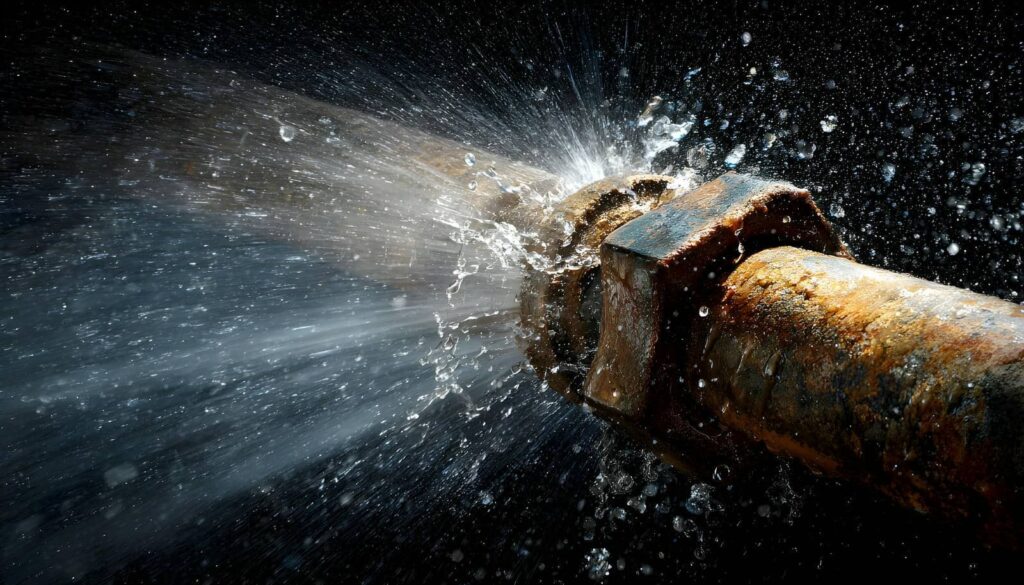
Imagine waking up to find water gushing from a burst pipe in your basement. It’s critical that you act quickly to minimize damage and restore your space. Start by evaluating the situation and shutting off the water supply. Knowing the right steps to take next can make all the difference in preventing mold growth and costly repairs. Let’s explore the essential actions you need to take when faced with this emergency.
Key Takeaways
- Immediately shut off the main water supply to prevent further flooding and damage.
- Turn off electricity in affected areas to avoid electrical hazards during cleanup.
- Use towels and a wet/dry vacuum to effectively remove excess water.
- Open windows and use fans to enhance ventilation and expedite drying.
- Document damage thoroughly for insurance claims and consider contacting water damage restoration professionals for assistance.
Assess the Situation Immediately
When a pipe bursts, you need to assess the situation immediately to minimize damage.
Start by identifying potential hazards in the area, such as electrical outlets or appliances that might come into contact with water. This step is essential for your safety and the safety of others around you.
Next, assess the water source; determine whether it’s a hot or cold water line, as this affects how you’ll handle the cleanup. If it’s a hot water line, the risk of scalding increases, so approach with caution.
Document the extent of the damage for insurance claims later. By taking these steps, you protect yourself and create a safer environment for everyone involved.
Shut Off the Water Supply
To effectively mitigate water damage, you must shut off the water supply as soon as possible.
Locate your main water shutoff valve, typically found near the water meter or where the main line enters your home. Turn it clockwise to stop the flow of water.
If you can’t find it, check your home’s plumbing maintenance records for its location. Remember, regular maintenance can help ensure you know where these critical valves are and that they function properly.
After shutting off the water, you’ll minimize the potential for extensive damage and mold growth.
Stay calm, act swiftly, and you’ll be well on your way to managing this unexpected plumbing emergency effectively.
Turn Off Electricity in Affected Areas
After shutting off the water supply, your next step is to turn off the electricity in the affected areas.
Locate your circuit breaker panel and switch off the power to prevent any electrical hazards.
Always prioritize safety to protect yourself and your property during the cleanup process.
Locate Circuit Breaker Panel
Before you begin any cleanup efforts after a burst pipe, it’s vital to locate the circuit breaker panel and turn off electricity in the affected areas.
Start by identifying the circuit that powers the impacted locations. This circuit identification is significant for your safety and helps prevent electrical hazards during the cleanup process.
Once you’ve found the right breaker, make sure it’s switched to the “off” position. Remember, breaker safety is paramount; don’t attempt to touch any electrical devices or outlets until the power is completely off.
If you’re unsure about which breaker to turn off, consult a professional electrician to guide you. Prioritizing your safety sets a strong foundation for effective cleanup and restoration.
Turn Off Power
While dealing with a burst pipe, turning off the power in affected areas is essential to ensure your safety and prevent further damage.
Start by locating the circuit breaker panel and identifying the switches connected to the impacted zones. Flip those switches to the off position, ensuring you’re prioritizing power safety.
This step protects you from electrical hazards and minimizes the risk of appliances being damaged by water exposure.
Remember, emergency preparedness involves a proactive approach, so don’t hesitate to take these actions swiftly.
If you’re unsure about handling electrical systems, consider calling a professional. Your safety and the integrity of your home depend on taking these critical steps during a plumbing emergency.
Safety First Always
Ensuring your safety is paramount when dealing with a burst pipe, so turning off electricity in affected areas should be your immediate priority.
Water and electricity don’t mix, and any exposure can be extremely hazardous. Before you begin cleanup, locate your circuit breaker and shut off power to avoid electric shocks.
Wear appropriate safety equipment, such as gloves and waterproof boots, to protect yourself from potential hazards.
After securing the area, make sure to list emergency contacts in case you need professional help. Whether it’s a plumber or an electrician, having these contacts ready can expedite the recovery process.
Use Towels to Soak Up Excess Water
To effectively soak up excess water, choose highly absorbent towels, as they’ll help minimize damage.
Once you’ve soaked up the water, use proper drying techniques to prevent mold growth, such as rotating towels frequently.
Don’t forget to dispose of wet towels properly to avoid lingering moisture in your home.
Choose Absorbent Materials
When dealing with a burst pipe, choosing the right absorbent materials is essential for effective water cleanup.
Using the proper materials can help you quickly manage excess water and minimize damage. Here are some options you should consider:
- Sponge materials: They’re great for soaking up spills and can handle considerable amounts of water.
- Absorbent pads: These are specifically designed for quick absorption, making them ideal for large areas.
- Microfiber towels: Lightweight and highly absorbent, they’re perfect for smaller messes and easy to wring out.
- Old blankets or clothes: If you’re in a pinch, these can effectively soak up excess moisture.
Selecting the right absorbent materials will considerably streamline your cleanup process.
Proper Drying Techniques
Using towels to soak up excess water is an essential step in the drying process after a burst pipe, as it helps prevent further damage to your property.
Start by grabbing absorbent towels and blotting the areas with standing water. This method effectively reduces moisture levels before you employ drying equipment.
After soaking up the water, conduct a moisture assessment to identify any hidden damp spots that might require additional attention. Ascertain you rotate and replace towels frequently to enhance absorption.
Once you’ve tackled the excess water, you can set up fans or dehumidifiers to aid in the drying process.
Properly using towels protects your belongings and promotes a healthier living environment.
Disposal of Wet Towels
After you’ve soaked up excess water with towels, it’s essential to dispose of them properly to prevent mold growth and unpleasant odors. Here’s how you can handle towel disposal effectively:
- Check for Reusability: If the towels are still in good condition, consider washing and reusing them.
- Dispose of Contaminated Towels: If the towels are soiled or damaged, seal them in a plastic bag to prevent moisture escape, then throw them in the trash.
- Explore Recycling Options: Some places accept old towels for recycling, especially if they’re made of cotton.
- Compost Natural Fiber Towels: If you’re using towels made from natural fibers, cut them up and add them to your compost pile.
Following these steps will help you manage towel disposal responsibly and minimize environmental impact.
Utilize a Wet/Dry Vacuum
A wet/dry vacuum is an essential tool for efficiently removing water caused by burst pipes.
To use it effectively, start by selecting the right attachment for your situation; a wide nozzle is ideal for large areas, while a narrow one targets smaller spaces.
Employ proper wet vacuuming techniques by making slow, sweeping motions to maximize effective suction.
Be sure to monitor the vacuum’s tank capacity, emptying it as needed to maintain peak performance.
For best results, work systematically through the affected areas, ensuring you capture as much water as possible.
Remember, the sooner you act, the less damage you’ll incur.
Remove Furniture and Personal Items
As water spreads quickly from burst pipes, promptly removing furniture and personal items from affected areas is crucial to minimizing damage.
Begin by following these steps for effective furniture removal and personal item protection:
- Assess the Area: Identify all items in the water-logged zone that need to be relocated.
- Prioritize Items: Focus on valuable furniture and irreplaceable personal items first.
- Use Protective Gear: Wear gloves and boots to protect yourself from contaminants while handling wet items.
- Dry Off Items: Once removed, dry furniture and personal items outdoors or in a well-ventilated area to prevent mold growth.
Taking these steps ensures your belongings are safeguarded against further damage and helps speed up the cleanup process.
Open Windows for Ventilation
Opening windows is essential for improving air circulation after a burst pipe incident.
This simple action helps reduce moisture accumulation, which can lead to mold growth if left unchecked.
Improve Air Circulation
To effectively reduce moisture levels in your home after a burst pipe, improving air circulation is essential.
Utilizing proper airflow techniques and ventilation strategies can make a significant difference. Here are four actionable steps you can take:
- Open Windows: This allows fresh air to flow in, replacing humid air.
- Use Fans: Position fans strategically to enhance air movement in affected areas.
- Create Cross-Ventilation: Open windows on opposite sides of your home to promote a breeze.
- Keep Doors Open: Make sure interior doors are open to facilitate airflow throughout rooms.
Reduce Moisture Accumulation
When tackling moisture accumulation after a burst pipe, letting fresh air in through open windows is an essential step. This simple action enhances ventilation, which is fundamental for effective moisture control.
By allowing air to circulate, you’re actively reducing humidity levels, making it harder for condensation to settle on surfaces.
Consider installing moisture barriers in areas prone to dampness, as they can further protect your home from moisture intrusion.
Keep in mind that proper condensation control is important to prevent future issues. Open windows promote airflow and create a sense of belonging in your space, as you connect with the outside environment.
Embrace this proactive approach to maintain a healthier, drier home.
Prevent Mold Growth
While you address the aftermath of burst pipes, preventing mold growth is essential for maintaining a healthy environment. One effective way to do this is by ensuring proper ventilation.
Here are some mold prevention strategies to take into account:
- Open windows: Allow fresh air to circulate, reducing humidity levels.
- Use fans: Direct airflow towards wet areas to expedite drying.
- Dehumidifiers: Invest in a dehumidifier to control humidity effectively, keeping it below 60%.
- Seal leaks: Regularly check for leaks in your plumbing and roof to prevent moisture accumulation.
Implementing these humidity control methods will greatly lower the risk of mold growth, creating a safer space for you and your loved ones.
Dry Out the Area With Fans
After addressing the source of the leak, immediately dry out the area with fans to prevent mold growth and further damage.
Proper fan placement is essential; position fans to blow air across wet surfaces and toward open windows or doors to facilitate airflow. Use multiple fans if necessary, directing their output strategically to cover all damp areas.
For effective drying techniques, start with high-velocity fans to rapidly evaporate moisture. Keep the fans running continuously for at least 24 to 48 hours, checking regularly for any remaining dampness.
This approach helps in drying out your space and fosters a sense of community as you take proactive steps to restore your home together.
Use Dehumidifiers to Reduce Moisture
To effectively reduce moisture in areas affected by burst pipes, using dehumidifiers is crucial. Proper moisture control will help prevent mold growth and structural damage.
Here’s how you can maximize their efficiency:
- Set the Right Dehumidifier Settings: Start with a lower humidity setting (around 30-60%).
- Positioning Matters: Place the dehumidifier in the most affected areas for peak airflow.
- Regularly Check the Tank: Empty the water tank frequently to ensure continuous operation.
- Use Multiple Units: If the area is large, consider using several dehumidifiers to enhance moisture control.
Inspect for Structural Damage
After addressing moisture, you need to inspect for structural damage caused by burst pipes.
Start by identifying affected areas, then check for mold growth that could compromise air quality.
Finally, assess the structural integrity of walls, ceilings, and floors to ensure they remain safe and sound.
Identify Affected Areas
When dealing with burst pipes, inspecting for structural damage is essential to mitigate further issues.
You’ll want to take the time to identify affected areas and assess damage severity effectively. Here’s how you can do that:
- Identify water sources: Trace any visible water flow to pinpoint where the burst occurred.
- Check ceilings and walls: Look for sagging or discoloration, which indicates water accumulation.
- Examine floors: Feel for soft spots or warping, as these are signs of water damage.
- Inspect basements and crawl spaces: Don’t overlook these areas, as they can harbor hidden water sources.
Check for Mold Growth
As you assess the damage from burst pipes, checking for mold growth is essential since mold can begin to develop within 24 to 48 hours in damp conditions.
Start by inspecting areas that were exposed to water, such as walls, ceilings, and flooring. Look for visible signs of mold, like black or green spots, and be mindful of any musty odors, which indicate hidden growth.
Implement mold prevention strategies, such as maintaining low humidity levels and ensuring proper ventilation, to help safeguard your home. Additionally, consider using air purifiers to improve indoor air quality.
If you find significant mold growth, it’s vital to consult a professional to handle the cleanup safely and effectively. Your health and safety depend on it.
Assess Structural Integrity
Once you’ve checked for mold growth, it’s important to assess the structural integrity of your home.
A thorough structural assessment can help you identify potential issues that may have arisen from water damage.
Here’s how you can conduct a damage evaluation:
- Inspect Walls: Look for sagging, cracks, or discoloration.
- Examine Floors: Check for warping or soft spots indicating water saturation.
- Assess Ceilings: Watch for bulging areas or stains that signal leaks.
- Evaluate Foundation: Look for cracks or shifting that could compromise stability.
Check for Mold Growth Risks
Since water damage from burst pipes can create an ideal environment for mold growth, it’s important to act quickly and assess the affected areas.
Start by inspecting all surfaces that came into contact with water, as mold spores can begin to proliferate within 24 to 48 hours. Look for discoloration, musty odors, or visible mold, especially in hidden corners and behind walls.
Implement moisture control measures by using dehumidifiers and ensuring proper ventilation. If you find mold, it’s vital to address it immediately, as it can lead to health issues and structural damage.
Document the Damage for Insurance
To ensure a smooth insurance claim process, you must thoroughly document the damage caused by burst pipes. This step is essential for validating your insurance claims and ensuring you receive proper compensation.
Here’s how to effectively document losses:
- Take Photos: Capture clear images of all affected areas and items, including flooring, walls, and personal belongings.
- List Damaged Items: Create a detailed inventory of all damaged items, including their estimated value and purchase dates.
- Record Water Levels: Note the height of water in affected areas to demonstrate the extent of the damage.
- Keep Receipts: Save any receipts for emergency repairs or temporary accommodations, as these can support your claim.
Contact a Water Damage Restoration Expert
After documenting the damage for your insurance claim, the next step is contacting a water damage restoration expert.
These professionals specialize in water damage evaluation, ensuring they assess the extent of the damage accurately. By utilizing advanced restoration techniques, they can effectively mitigate further issues, such as mold growth and structural damage.
When you reach out, provide them with details about the situation, including the duration of water exposure and the affected areas.
Their expertise helps restore your home and gives you peace of mind during a stressful time.
Sanitize Affected Surfaces
Once you’ve addressed the immediate water damage, it’s vital to sanitize the affected surfaces to prevent further issues.
You’ll need essential cleaning supplies and effective disinfecting techniques to eliminate harmful pathogens.
Additionally, taking steps to prevent mold growth will safeguard your space from future complications.
Essential Cleaning Supplies
When dealing with water damage from burst pipes, having the right cleaning supplies on hand is crucial for effectively sanitizing affected surfaces.
You’ll want to verify your cleaning products and protective gear are ready to tackle the mess. Here’s a list of must-have supplies:
- Disinfectant Spray: Use a strong disinfectant to eliminate bacteria and mold.
- Microfiber Cloths: These are effective for absorbing water and cleaning surfaces without leaving lint.
- Rubber Gloves: Protect your hands while handling contaminated materials.
- Mop and Bucket: For larger areas, a mop helps remove excess water and sanitize floors.
Equipping yourself with these essentials will help you clean efficiently and foster a sense of community as you tackle the challenge together.
Disinfecting Techniques Explained
To effectively sanitize surfaces affected by water damage, you’ll need to use proper disinfecting techniques. Start by removing any debris or standing water, then select appropriate cleaning agents.
Look for EPA-approved disinfectants that kill bacteria and viruses, ensuring they’re suitable for the specific surfaces you’re treating. Apply the cleaning agent according to the manufacturer’s instructions, allowing it to sit for the recommended dwell time for maximum effectiveness.
Use a clean cloth or sponge to wipe down the surfaces, ensuring even coverage. Don’t forget to focus on high-touch areas like doorknobs and light switches.
Once sanitized, rinse surfaces if necessary, and allow them to air dry completely to maintain a safe environment. Remember, thoroughness is key when disinfecting surfaces.
Preventing Mold Growth
Since mold can begin to develop within 24 to 48 hours after water exposure, it’s crucial to act quickly to sanitize affected surfaces.
Implement these effective mold prevention strategies to protect your home:
- Use a Bleach Solution: Mix one cup of bleach with a gallon of water to disinfect surfaces.
- Clean and Dry: Thoroughly clean all affected areas with soap and water before drying completely.
- Maintain Humidity Control: Keep indoor humidity below 60% using dehumidifiers or air conditioning.
- Ventilate: Open windows and doors to promote airflow and accelerate drying.
Remove Wet Carpets and Rugs
As soon as you notice water damage from burst pipes, it’s crucial to remove wet carpets and rugs promptly to prevent mold growth and further structural damage.
Start by carefully lifting the carpets, ensuring you don’t damage the flooring beneath. If the water is significant, you may need professional help for effective carpet disposal.
For rugs, assess if they’re salvageable; if so, initiate rug cleaning as soon as possible. Use a wet vac to extract excess moisture, followed by a thorough wash with appropriate cleaning solutions.
Allow ample drying time in a well-ventilated area. Remember, addressing wet carpets and rugs quickly protects your home and fosters a sense of safety and belonging in your living space.
Take Precautions Against Contaminants
When dealing with water damage from burst pipes, you must take precautions against contaminants that could pose health risks.
Understanding contaminant sources is vital to protecting yourself and your family. Here are some essential steps to ensure safety:
- Wear Protective Gear: Always use gloves, masks, and waterproof boots to shield yourself from harmful substances.
- Identify Contaminant Sources: Check for potential sources like sewage, chemicals, or mold in the affected area.
- Ventilate the Area: Open windows and use fans to reduce moisture and improve airflow, minimizing mold growth.
- Dispose of Contaminated Items: Safely discard any materials that can’t be cleaned, such as porous items soaked in contaminated water.
Repair or Replace Damaged Pipes
To effectively address water damage from burst pipes, you need to assess whether to repair or replace the damaged sections.
Start by examining the pipe materials—copper, PVC, or PEX—since each has unique lifespans and durability. If the damage is minimal, repairing might be feasible; however, extensive corrosion or cracks often signal the need for replacement.
Consider the installation techniques used in your current system; improper installation can lead to recurring issues.
When replacing, make certain you select compatible materials and follow best practices for installation to prevent future problems.
Ultimately, making the right choice resolves immediate issues and contributes to the overall integrity of your plumbing system, fostering a safer, more reliable home environment.
Restore Electrical Systems Safely
Before restoring electrical systems after a water incident, confirm you prioritize safety to prevent further hazards. Follow these steps to ensure electrical safety:
- Cut Power: Shut off the main electrical supply to avoid shock or electrocution.
- Assess Damage: Inspect wiring, outlets, and devices for signs of water damage. If unsure, consult a professional.
- Use Grounding Techniques: Confirm all electrical systems are grounded properly to minimize risks and protect against surges.
- Dry Thoroughly: Make certain everything is completely dry before restoring power to prevent short circuits.
Taking these precautions will help you create a safe environment while restoring your electrical systems.
Replace Damaged Drywall
Evaluating the extent of water damage is vital before replacing drywall. If the damage is significant, you’ll need to remove the affected sections carefully. Start by cutting away the damaged drywall using a utility knife, making sure you wear protective gear.
Once removed, inspect the framing for any hidden moisture or mold.
When installing new drywall, measure accurately to ensure a snug fit and use screws for secure attachment. Don’t forget to install a moisture barrier behind the new drywall to prevent future water damage. This barrier is essential in areas prone to humidity.
Finally, finish the installation by taping and mudding seams, then sanding for a smooth surface. Following these steps will help restore your space effectively.
Reinstall Flooring as Needed
After addressing the drywall, you need to assess the extent of water damage to your flooring.
This evaluation will help you choose the appropriate flooring material that suits both the environment and your aesthetic preferences.
Once you’ve selected the right material, follow the installation guidelines to ensure a proper, lasting fit.
Assess Water Damage Extent
Once you’ve addressed the immediate water leak, it’s crucial to assess the extent of the damage to your flooring.
A thorough damage assessment helps guide your restoration process effectively. Follow these steps:
- Inspect the Area: Look for visible signs of water damage, such as discoloration or warping.
- Check for Mold: Examine corners and under furniture where moisture may linger.
- Test for Soft Spots: Press down on the flooring; soft areas may indicate significant damage.
- Determine Replacement Needs: Decide if sections can be repaired or if full replacement is necessary.
Choose Appropriate Flooring Material
Choosing the right flooring material is essential for restoring your space after a burst pipe incident. You’ll want to prioritize water-resistant options that can withstand potential future moisture exposure.
Materials like vinyl, laminate, and tile offer excellent flooring durability, ensuring your restoration lasts. Avoid traditional hardwoods and carpets, as they can absorb water and lead to mold growth.
Instead, opt for materials that are easy to clean and maintain, reducing long-term costs and effort. Consider how the flooring integrates with your home’s aesthetic, as a well-chosen material can enhance your space’s overall feel.
Follow Installation Guidelines
When reinstalling flooring after a burst pipe, it’s essential to follow the manufacturer’s installation guidelines closely. This ensures the longevity of your flooring and compliance with plumbing codes.
To get it right, consider these steps:
- Gather Installation Materials: Confirm you have all the necessary tools and materials before starting.
- Check for Damage: Inspect the subfloor thoroughly for any water damage or mold.
- Follow Guidelines: Adhere strictly to the manufacturer’s specifications for laying the flooring.
- Allow for Expansion: Leave appropriate gaps for expansion, especially in moisture-prone areas.
Apply Sealants to Prevent Future Leaks
To effectively prevent future leaks after addressing burst pipes, apply high-quality sealants to vulnerable joints and fittings.
Choose the right sealant types based on your specific needs; silicone, epoxy, and polyurethane are popular options. Each type offers unique benefits—silicone is flexible, epoxy provides a robust bond, and polyurethane is ideal for outdoor applications.
Confirm surfaces are clean and dry before application for peak adhesion. Applying sealants enhances leak prevention and extends the lifespan of your plumbing system.
By taking these proactive measures, you foster a sense of security in your home, knowing you’ve mitigated the risk of future leaks.
Maintain Regular Pipe Inspections
Even with sealants applied to prevent future leaks, regular pipe inspections are essential for maintaining the integrity of your plumbing system.
By establishing regular maintenance schedules, you can catch potential issues early and avoid costly repairs.
Here are some effective pipe inspection techniques to take into account:
- Visual Inspections: Regularly check exposed pipes for any signs of corrosion or wear.
- Leak Detection Tools: Use moisture meters to identify hidden leaks behind walls.
- Camera Inspections: Employ a camera to inspect the interior of pipes for blockages and damage.
- Pressure Testing: Conduct pressure tests to verify your system maintains peak performance.
Create an Emergency Water Cleanup Plan
Creating an emergency water cleanup plan is essential for minimizing damage and ensuring safety when burst pipes occur. Start by compiling a list of emergency contacts, including local plumbers, water damage restoration services, and insurance agents.
Make sure everyone in your household knows how to access this list quickly. Next, develop a cleanup checklist that outlines specific steps to take during a water emergency. Include tasks like shutting off the main water supply, removing furniture, and using towels or mops to absorb excess water.
Regularly review and update your plan to reflect any changes in your household or contacts. By having a clear and actionable plan, you’ll foster a sense of security and readiness among your family during stressful situations.
Educate Family Members on Emergency Procedures
As burst pipes can cause significant damage, it’s essential to educate family members on emergency procedures to ensure a swift and effective response.
By conducting emergency drills, you’ll empower everyone to act confidently. Here are four steps to help establish family roles:
- Identify Responsibilities: Assign specific tasks such as turning off the main water supply or gathering emergency supplies.
- Create a Communication Plan: Make sure everyone knows how to contact each other during an emergency.
- Practice Regularly: Schedule emergency drills to reinforce everyone’s roles and responsibilities.
- Review and Adjust: After drills, discuss what worked and what didn’t, making necessary adjustments for improvement.
Frequently Asked Questions
How Can I Prevent Burst Pipes in Winter?
To prevent burst pipes in winter, you should insulate exposed pipes, seal drafts in your home, and keep your thermostat consistent. These winter preparation steps help maintain your pipes’ integrity, ensuring a cozy, worry-free season.
What Are the Signs of Hidden Water Damage?
You’ll notice signs of hidden water damage through water stains on walls or ceilings and musty odors in your home. These indicators often suggest moisture issues that need immediate attention to prevent further damage.
Should I File an Insurance Claim for Water Damage?
Absolutely, you should file an insurance claim for water damage. Your insurance policy likely covers it. Get a damage assessment to support your claim and ensure you receive the compensation you deserve. Don’t hesitate!
How Long Does It Take for Mold to Develop After Water Exposure?
Mold growth can start within 24 to 48 hours after water exposure. To prevent it, act quickly by drying affected areas and maintaining low humidity, ensuring a healthier environment for you and your loved ones.
Can I Handle Water Damage Cleanup Myself?
Yes, you can handle water damage cleanup yourself, but it’s essential to assess the extent. A DIY cleanup may save money, yet professional help ensures thoroughness and prevents mold growth, fostering a safer environment for everyone.
Summary
In the chaos of burst pipes, every second counts. By swiftly evaluating the situation, shutting off the water supply, and utilizing tools like wet/dry vacuums, you can mitigate damage effectively. Picture a storm outside, yet inside, you’re in control—windows open, fans whirring, and family members ready to act. With a solid emergency plan and regular inspections, you’ll tackle the current crisis and prevent future mishaps, ensuring your home remains a safe haven.